
Running on Empty
How the Middle East conflict is disrupting global energy – and what your business should do now.
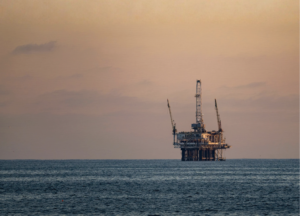
The International Energy Agency’s Executive Director Fatih Birol has called it “the greatest threat to global energy security in history.” Since strikes on Iran began in late February 2026, commercial tanker traffic through the Strait of Hormuz – the narrow chokepoint through which roughly 20% of the world’s oil and LNG trade normally passes – has been reduced to a trickle. Brent crude, which averaged $68 a barrel through 2025, has surged past $120 at the height of the crisis.
The energy disruption is the most visible consequence. But the cascading effects – on petrochemicals, fertilisers, industrial gases, freight costs and inflation – are radiating well beyond the fuel pump. Smart businesses are already planning.
Step 1: Consider the Scenarios
Before your business can plan, it needs to understand the range of possible futures. Three scenarios will frame your response:
Best Case — Regional Détente: The recently negotiated ceasefire holds. Tanker traffic through the Strait of Hormuz resumes within weeks. Oil prices steadily retrace toward pre-conflict levels and petrochemical supply chains restabilise by mid-year.
Worst Case — Prolonged and/or Escalating Conflict: The ceasefire fails. Attacks on energy infrastructure (refineries, oil fields, pipelines) multiply. The conflict widens — potentially closing the Bab-el-Mandeb, the Gulf’s second major chokepoint. Oil breaches $150. Disruptions become structurally entrenched.
Most Likely Case — A Grinding Middle Ground: The conflict neither resolves quickly nor escalates catastrophically. Partial tanker flows resume intermittently but unpredictably. Prices remain elevated and volatile for a prolonged period. Plan for this scenario, but bear in mind that the others remain possible.
Assign your Corporate Affairs team to monitor media, government and industry developments continuously. Understanding which scenario is unfolding – and how quickly – is itself a strategic advantage.
Step 2: Assess Your Risk
This situation presents two interrelated risk dimensions for most businesses – Supply and Price – and every critical business input needs to be assessed against both.
Rate each input (fuel, raw materials etc.) using a traffic light framework: Green — Within Tolerance, Amber — Emerging Risk, Red — Critical Situation.
For Supply Risk, model supply against demand over 30 and 90 day horizons. Note that demand may shift unexpectedly too; your customers are navigating the same disruption!
For Price Risk, model the profitability impact at varying cost increase scenarios.
Reassess frequently. This situation is moving fast.
Step 3: Plan Your Contingencies
Risk awareness without a response plan is just problems on a neat spreadsheet. Once you have assessed your exposure, develop structured contingency options for each at-risk input using the PACE Options Framework.
PACE gives your team a tiered, disciplined way to think about supply continuity – from your preferred approach through to last-resort options you hope never to use. For each critical input, develop options across all four tiers:
| Category | Description |
| P – Primary | Preferred method of ensuring supply continuity under current conditions. |
| A – Alternate | Backup approach when the Primary becomes constrained or unavailable. |
| C – Contingent | Third-tier fallback requiring more effort, cost or complexity. |
| E – Emergency | Last-resort option. Higher cost, lower quality, or significant operational disruption – but it keeps you running. |
Develop your PACE options now, before you need them. Options exercised ahead of a crisis cost a fraction of those exercised in the middle of one.
Add a Step 4 – Explore Opportunities.
It was former White House Chief of Staff Rahm Emanuel, who said: “You never want a serious crisis to go to waste. And what I mean by that [is] it’s an opportunity to do things that you think you could not before”.
He had a point. These situations present risk, but also opportunity. A broken supply relationship creates space for a better one. A forced operational change accelerates a restructure that was long overdue. Market uncertainty may prompt customers to lock in long-term contracts they previously resisted.
The discipline is ensuring that short-term actions (such as your PACE contingencies) nest inside a long-term strategy. This is why Board and executive alignment on organisational purpose matters most in the early stages of a crisis. Teams that are clear on where they are going make better decisions under pressure, and are better placed to recognise an opportunity when one appears.
So What? From Planning to Execution
Planning is necessary. Executing under pressure is the harder discipline.
Learn from the recent past. COVID and the energy crisis at the outbreak of the Ukraine War are recent memories. The businesses that came through best moved early, communicated clearly, and made hard calls before they became unavoidable. Apply those lessons now.
Stand up a crisis rhythm. Establish a regular meeting cadence for your leadership team to review risk ratings, share information, test assumptions and make decisions.
Know when to adjust. Define your trigger points now – specific price levels or supply thresholds – at which you shift scenario response. Waiting until the situation forces your hand is itself a decision, and rarely the right one.
Stay close to government. In a worst-case scenario, governments may move to centralised allocation of fuel and critical inputs. You don’t want to miss out on being a part of that conversation. Engage industry bodies, brief relevant ministers, and understand what emergency frameworks and support mechanisms are being considered. Businesses in the room are better placed to influence the outcome.
Deep pockets help. Clear heads help more. Assess the risk, plan the contingencies, pursue the opportunities, and execute with discipline. The businesses that do this well will not just navigate this crisis – they will come out the other side of it stronger.